The yeast elimination diet is designed to reduce or eliminate yeast and sugar from your diet, which may help alleviate symptoms associated with yeast overgrowth, such as fatigue, digestive issues, and skin problems.
This diet typically involves avoiding foods that are high in sugar and yeast, including bread, alcohol, and certain fruits, while focusing on whole foods like vegetables, lean proteins, and healthy fats.
Creating a Vibrant Kitchen Space
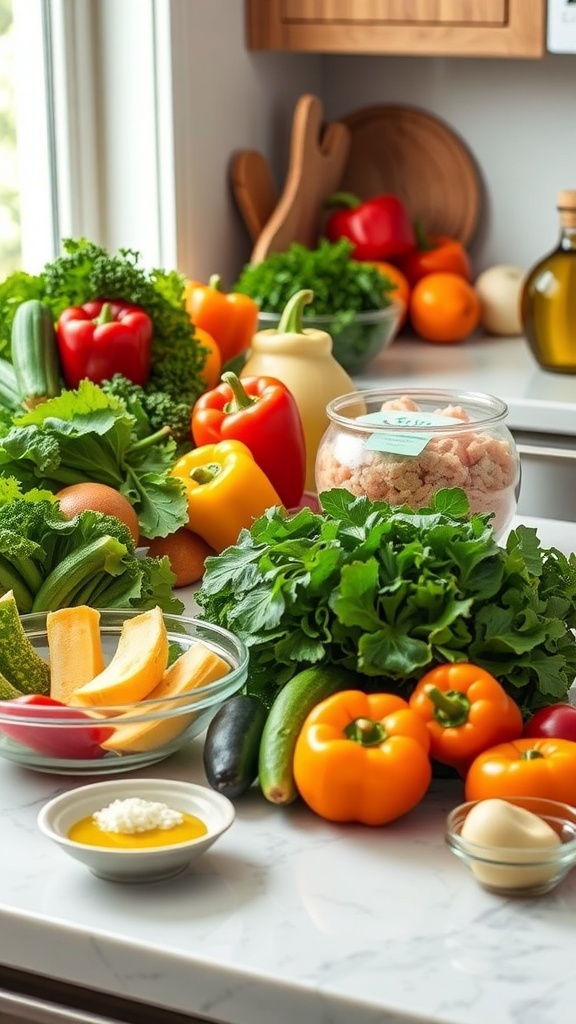
A well-organized kitchen countertop can inspire healthy cooking habits.
Brightly colored vegetables and lean proteins create an inviting atmosphere that encourages meal preparation.
A clean and bright kitchen setting enhances the overall experience, making it easier to focus on health and wellness.
Essential Ingredients for Your Diet
When following a yeast elimination diet, the choice of ingredients is vital.
Fresh, non-starchy vegetables like broccoli, spinach, and zucchini should take center stage.
These vegetables are not only nutrient-dense but also low in sugar, making them ideal for this dietary approach.
Incorporating lean proteins such as chicken, turkey, and fish ensures that meals are satisfying and nourishing.
Healthy fats, including avocado and olive oil, provide essential nutrients and help keep you full longer.
Organizing Your Countertop
To create a functional and appealing kitchen space, arrange your countertop thoughtfully.
Use bowls to display leafy greens and vibrant bell peppers, making them easily accessible for cooking.
A bottle of olive oil should be within reach, serving as a staple for dressings and cooking.
Consider using clear containers for nuts and seeds, which not only keeps them fresh but also adds a decorative touch.
This organization not only enhances the visual appeal but also promotes a more efficient cooking process.
Hydration and Wellness
Staying hydrated is a key aspect of any health-focused diet.
Keep a pitcher of water or herbal teas on your countertop as a reminder to drink throughout the day.
Hydration supports digestion and overall well-being, especially during the yeast elimination phase.
Meal Preparation Tips
Planning and preparing meals in advance can greatly simplify your dietary journey.
Set aside time each week to chop vegetables and portion out proteins.
This preparation makes it easier to assemble meals quickly, reducing the temptation to reach for less healthy options.
Consider batch cooking grains like quinoa or brown rice, which can serve as a base for various meals.
Having these staples ready to go can streamline your cooking process and keep you on track.
Monitoring Your Progress
Keeping track of your food intake and symptoms is essential during the elimination phase.
Consider maintaining a food diary to identify any potential triggers.
This practice can help you understand how different foods affect your body and guide your reintroduction process.
Regularly assessing your progress can motivate you to stay committed to your health goals.
Celebrate small victories along the way, whether it’s feeling more energetic or noticing improvements in digestion.
Comprehensive Yeast Elimination Diet Plan
The yeast elimination diet is structured to last several weeks, allowing your body to detoxify and restore balance. It emphasizes nutrient-dense foods while avoiding potential triggers that may exacerbate yeast-related symptoms.
Ingredients
- Lean meats (chicken, turkey, fish)
- Non-starchy vegetables (broccoli, spinach, zucchini)
- Healthy fats (avocado, olive oil, coconut oil)
- Gluten-free grains (quinoa, brown rice)
- Nuts and seeds (almonds, chia seeds)
- Herbs and spices (garlic, ginger, turmeric)
- Water and herbal teas
Instructions
- Eliminate all sources of sugar and yeast from your diet, including bread, pastries, alcohol, and sugary beverages.
- Focus on consuming whole, unprocessed foods that are low in sugar and high in nutrients.
- Incorporate a variety of non-starchy vegetables and lean proteins into your meals.
- Stay hydrated by drinking plenty of water and herbal teas.
- Monitor your symptoms and food intake to identify any potential triggers.
- Gradually reintroduce foods after the elimination phase to determine which ones may cause issues.
Cook and Prep Times
- Prep Time: Varies depending on meal preparation
- Total Time: 4-6 weeks for elimination phase
- Servings: Varies based on individual meal plans
- Calories: Varies based on food choices
- Fat: Varies based on fat sources
- Protein: Varies based on protein sources
- Carbohydrates: Low to moderate, depending on choices