Yeast infections and bacterial vaginosis (BV) are two common vaginal conditions that can cause discomfort and irritation. Understanding the differences between them is crucial for effective treatment and management.
While both conditions can lead to similar symptoms, such as itching and unusual discharge, they have different causes and require different approaches for treatment.
Understanding Yeast Infections and Bacterial Vaginosis
Yeast infections and bacterial vaginosis (BV) are prevalent conditions that affect many individuals.
Both can lead to discomfort, but they stem from different causes and require distinct treatment approaches.
Recognizing the symptoms and understanding the underlying mechanisms is essential for effective management.
This guide provides a clear comparison to help differentiate between these two conditions.
Key Differences Between Yeast Infections and Bacterial Vaginosis
Yeast infections are primarily caused by an overgrowth of the fungus Candida.
This imbalance can occur due to various factors, including antibiotic use, hormonal changes, or a weakened immune system.
On the other hand, bacterial vaginosis arises from an imbalance in the normal bacterial flora of the vagina.
This condition is often linked to sexual activity, but it can also occur without sexual intercourse.
Symptoms to Watch For
Both yeast infections and BV can present similar symptoms, such as itching and unusual discharge.
However, the nature of the discharge can differ significantly.
Yeast infections typically produce a thick, white, cottage cheese-like discharge, while BV often results in a thin, grayish discharge with a fishy odor.
Recognizing these differences can aid in identifying the condition.
Treatment Options for Yeast Infections
For yeast infections, antifungal medications are the standard treatment.
These can be administered orally or as topical creams, depending on the severity of the infection.
Over-the-counter options are widely available, but consulting a healthcare provider for persistent symptoms is advisable.
This ensures the correct diagnosis and treatment plan.
Treatment Options for Bacterial Vaginosis
Bacterial vaginosis is typically treated with antibiotics.
Metronidazole and clindamycin are common prescriptions that help restore the natural balance of bacteria in the vagina.
It’s essential to complete the full course of antibiotics even if symptoms improve before finishing the medication.
This helps prevent recurrence and ensures effective treatment.
Visualizing the Vaginal Microbiome
An informative graphic can effectively illustrate the differences between yeast infections and bacterial vaginosis.
Such a graphic should include clear labels and a color-coded chart for easy understanding.
Illustrations depicting the vaginal microbiome, symptoms, and treatment options can enhance comprehension.
Visual aids serve as a valuable resource for individuals seeking to understand these conditions better.
Key Differences Between Yeast Infections and Bacterial Vaginosis
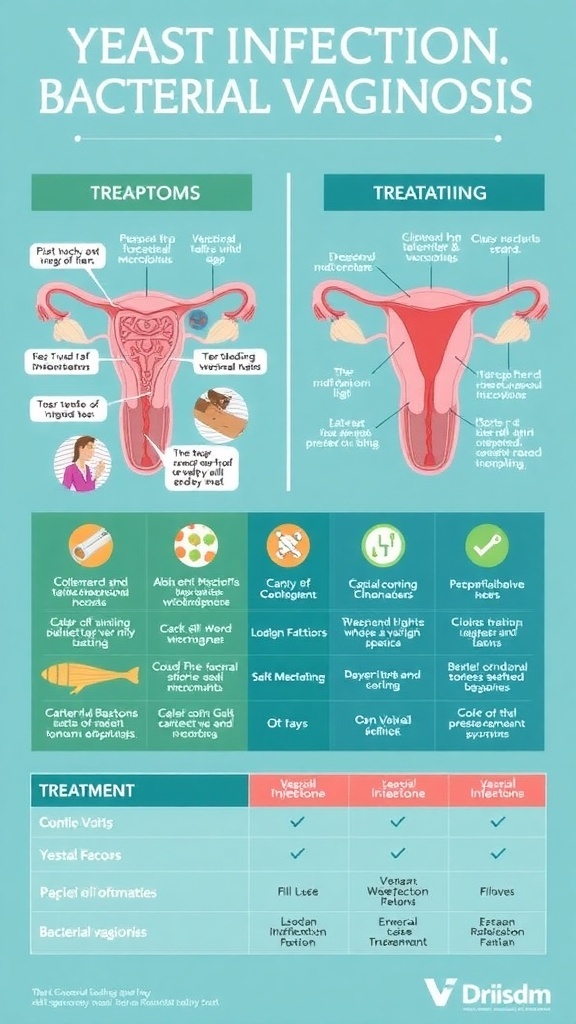
Yeast infections are caused by an overgrowth of the fungus Candida, while bacterial vaginosis results from an imbalance of bacteria in the vagina. Treatment for yeast infections typically involves antifungal medications, whereas BV is usually treated with antibiotics.