This curriculum focuses on the art of bread making, providing a hands-on approach to learning about ingredients, techniques, and the science behind baking. It is designed to engage students creatively while developing their culinary skills.
Through interactive lessons, students will explore different types of bread, the importance of yeast, and the process of fermentation. This curriculum encourages experimentation and creativity in the kitchen.
Engaging Bread Making Lessons
The bread-making curriculum is designed to be interactive and hands-on, allowing students to immerse themselves in the process of creating various types of bread. Each lesson is structured to last between one to two hours, making it ideal for classroom environments or workshops.
Students will explore a range of recipes, from simple no-knead options to more intricate artisan loaves. This variety ensures that everyone can find a bread-making project that excites them, fostering creativity and collaboration among peers.
Essential Ingredients for Success
Key ingredients form the backbone of any bread-making endeavor. Flour, water, yeast, salt, and optional ingredients like sugar and fats are fundamental to the process. Students will learn about the different types of flour, including all-purpose and whole wheat, and how each affects the final product.
Additional ingredients such as herbs, cheese, or seeds can be introduced to create unique flavor profiles. This encourages students to think outside the box and experiment with their bread creations.
The Art of Dough Preparation
Understanding the basics of dough preparation is crucial for successful bread making. Students will begin by mixing flour, water, yeast, and salt to create a basic dough. This foundational step is where the magic starts, as the ingredients come together to form a cohesive mixture.
Once the dough is prepared, students will learn about kneading techniques. Kneading is essential for gluten development, which gives bread its structure and texture. Demonstrating various kneading methods will help students grasp this important skill.
Fermentation and Its Importance
Fermentation plays a vital role in bread making, and students will explore the science behind it. They will learn how yeast ferments the dough, producing carbon dioxide that causes the bread to rise. This process not only affects the texture but also the flavor of the bread.
Understanding fermentation will empower students to appreciate the time and care that goes into making bread, highlighting the balance between patience and creativity in the kitchen.
Shaping, Proofing, and Baking
Once the dough has risen, the next steps involve shaping and proofing. Students will be guided through the process of shaping their dough into loaves or rolls, preparing them for the final rise before baking. This stage is crucial for achieving the desired shape and texture.
Finally, students will learn about baking techniques, including the appropriate temperatures and times for different types of bread. This knowledge will help them understand how to achieve a perfect crust and a soft, fluffy interior.
Encouraging Creative Variations
One of the most exciting aspects of the curriculum is the encouragement of creative variations. Students will be motivated to experiment with flavors and ingredients, allowing them to personalize their bread recipes. This not only enhances their culinary skills but also fosters a sense of ownership over their creations.
By sharing their unique bread ideas and results, students can learn from one another, creating a collaborative and supportive learning environment. The freshly baked loaves displayed at the center of the table will serve as a testament to their hard work and creativity.
Engaging Bread Making Lessons
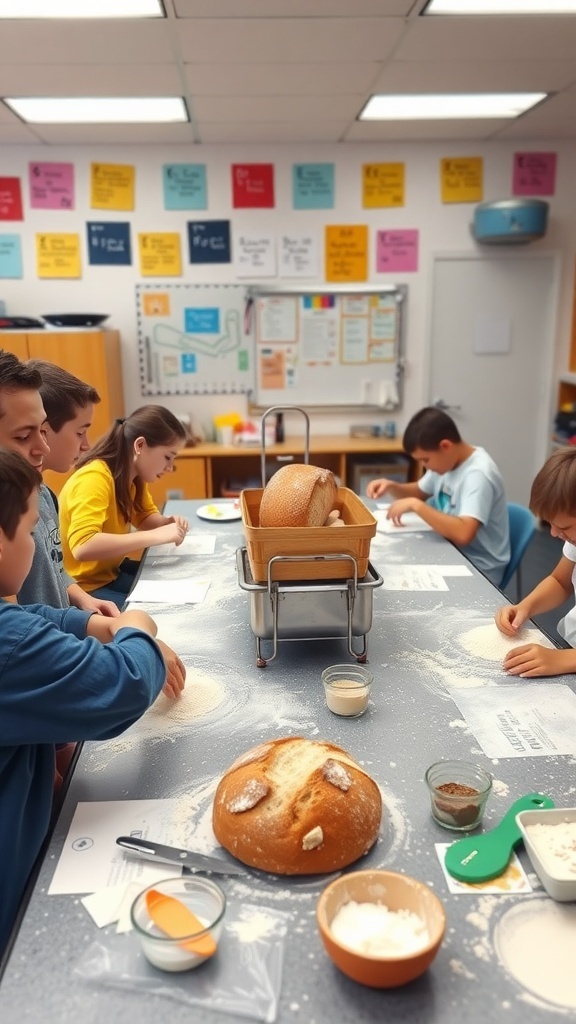
The curriculum includes a variety of bread recipes, from simple no-knead bread to more complex artisan loaves. Each lesson is structured to take approximately 1-2 hours, making it suitable for classroom settings or workshops.
Ingredients
- Flour (all-purpose, whole wheat, or specialty flours)
- Water
- Yeast (active dry or instant)
- Salt
- Sugar (optional, for flavor)
- Fats (butter or oil, optional)
- Additional ingredients (herbs, cheese, seeds, etc. for variations)
Instructions
- Introduction to Bread: Discuss the history of bread and its significance in various cultures.
- Basic Dough Preparation: Teach students how to mix flour, water, yeast, and salt to create a basic dough.
- Kneading Techniques: Demonstrate kneading methods and the importance of gluten development.
- Fermentation Process: Explain the role of yeast and fermentation in bread making.
- Shaping and Proofing: Guide students in shaping their dough and the proofing process before baking.
- Baking: Instruct on proper baking temperatures and times for different types of bread.
- Creative Variations: Encourage students to experiment with flavors and ingredients to create unique bread recipes.
Cook and Prep Times
- Prep Time: 30 minutes
- Cook Time: 30-45 minutes
- Total Time: 1-2 hours
- Servings: Varies based on recipe
- Calories: Varies based on ingredients used
- Fat: Varies based on recipe
- Protein: Varies based on recipe
- Carbohydrates: Varies based on recipe
Related
- Creative Egg Experiments for Fun and Learning
- DIY Play Dough Mat for Number Learning
- Christmas Themed Coloring Pages for Learning
- Creative Valentine’s Ideas for Early Years Learning in 2026