If you’re looking for a lunch that packs a flavorful punch, look no further than this Korean beef bibimbap. This dish is a delightful mix of marinated beef, fresh vegetables, and a perfectly fried egg – all served over rice. It’s not just a meal; it’s a vibrant culinary experience that will have your taste buds dancing.
Imagine a bowl filled with colorful veggies, tender beef, and a spicy gochujang sauce that ties everything together. This bibimbap recipe is perfect for meal prepping or impressing friends at lunchtime. It’s easy to customize, so you can add your favorite ingredients or adjust the spiciness to your liking.
Vibrant Ingredients of Bibimbap
Korean bibimbap is a feast for the eyes and the palate. The vibrant colors of marinated beef, fresh spinach, and julienned carrots combined with crisp cucumber create a visually appealing dish.
The arrangement is not just for aesthetics; each ingredient contributes unique flavors and textures. The marinated beef offers a savory note, while the vegetables add refreshing crispness. Together, they make a harmonious blend that elevates the entire meal.
The Heart of the Dish: Rice
At the base of this delectable bowl lies a bed of rice, providing a neutral foundation that balances the rich flavors above. Both white and brown rice options are available, allowing for a choice that fits various dietary preferences.
Rice is essential in Korean cuisine, often symbolizing sustenance and community. Here, it absorbs the flavors of the marinated beef and the spicy gochujang sauce, enhancing each bite.
Building Flavor with Gochujang
The spicy gochujang sauce is the star of the show, tying all the elements together with its bold heat and sweetness. Its unique flavor profile complements the savory beef and fresh vegetables, creating a delightful experience for the taste buds.
Gochujang is not only flavorful but also versatile. Adjusting the amount allows for customization according to personal spice tolerance, making this dish inviting for everyone.
The Perfect Egg Finish
To crown this vibrant dish, a perfectly fried egg is placed atop the bowl, adding a creamy texture that contrasts beautifully with the other ingredients. The runny yolk, when mixed in, enriches the entire dish with a luxurious mouthfeel.
This simple addition elevates the bibimbap, providing extra protein and a satisfying richness. It’s a hallmark of Korean cuisine, showcasing the skill and care put into each ingredient’s preparation.
Garnishing for Appeal
A sprinkling of sesame seeds and chopped green onions adds the finishing touch, enhancing both the aesthetic and flavor profile of bibimbap. These garnishes introduce a subtle nuttiness and freshness that rounds out the dish perfectly.
Such details not only contribute to the visual allure of the meal but also enhance the overall taste experience, inviting diners to appreciate the craftsmanship behind each bowl of bibimbap.
Creating a Traditional Setting
To fully appreciate the essence of bibimbap, enjoy it in a setting that reflects Korean tradition. Incorporating elements like wooden chopsticks, small side dishes, and a warm, inviting atmosphere enhances the overall dining experience.
Sharing this meal with others, surrounded by cultural elements, turns an ordinary lunch into a special occasion. It embodies the spirit of Korean dining, where food is a means of connection and celebration.
Delicious and Nutritious Korean Bibimbap
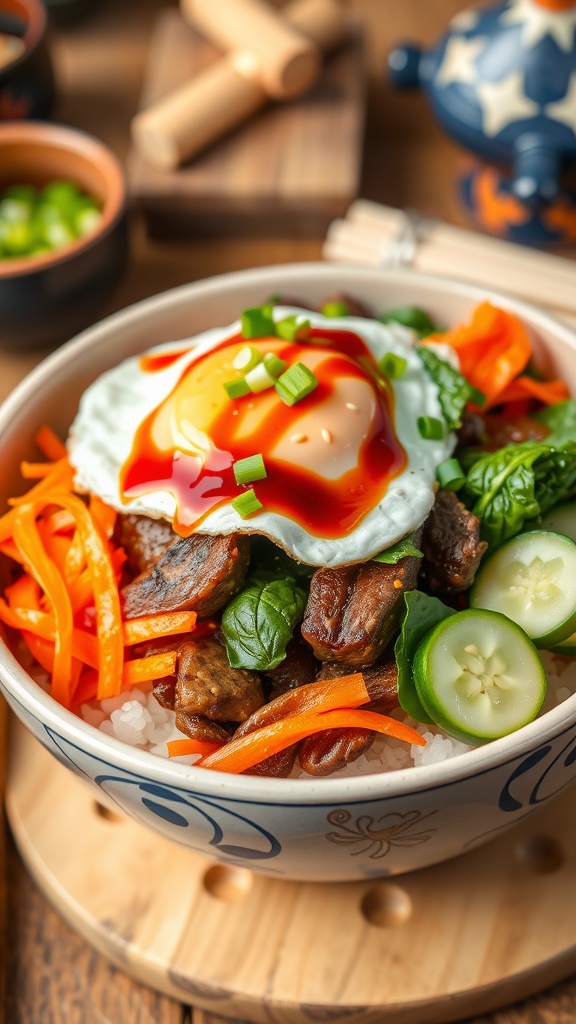
This bibimbap features tender, marinated beef that’s both savory and slightly sweet, complemented by a variety of fresh vegetables like spinach, carrots, and cucumbers. The dish is topped with a fried egg and a drizzle of gochujang sauce, creating a satisfying balance of flavors that is both hearty and refreshing.
Ingredients
- 1 cup cooked white or brown rice
- 200g ground beef or sliced beef
- 1 tablespoon soy sauce
- 1 tablespoon sesame oil
- 1 tablespoon sugar
- 1 garlic clove minced
- 1 cup spinach blanched
- 1 carrot julienned
- 1 cucumber julienned
- 1 fried egg per serving
- 2 tablespoons gochujang sauce (Korean chili paste)
- Sesame seeds for garnish
- Green onions for garnish
Instructions
- Marinate the Beef: In a bowl, mix ground beef with soy sauce, sesame oil, sugar, and minced garlic. Let it marinate for at least 30 minutes.
- Cook the Beef: In a skillet over medium heat, cook the marinated beef until browned and cooked through. Set aside.
- Sauté Vegetables: In the same skillet, quickly sauté the spinach, carrots, and cucumber until just tender. Season lightly with salt.
- Assemble the Bibimbap: In a bowl, place a serving of rice at the bottom. Arrange the cooked beef and sautéed vegetables on top of the rice.
- Add the Egg: Top with a fried egg and drizzle with gochujang sauce. Garnish with sesame seeds and green onions.
- Serve: Mix everything together before enjoying your delicious bibimbap.
Cook and Prep Times
- Prep Time: 10 minutes
- Cook Time: 20 minutes
- Total Time: 30 minutes
- Servings: 2 bowls
- Calories: 550kcal
- Fat: 25g
- Protein: 30g
- Carbohydrates: 60g
Related
- Bulgogi Beef Bibimbap: A Flavorful Korean Rice Bowl Recipe
- What Is The Shape Of Korean Eyes?
- Who Won In Korean War?
- How many korean gods are there?